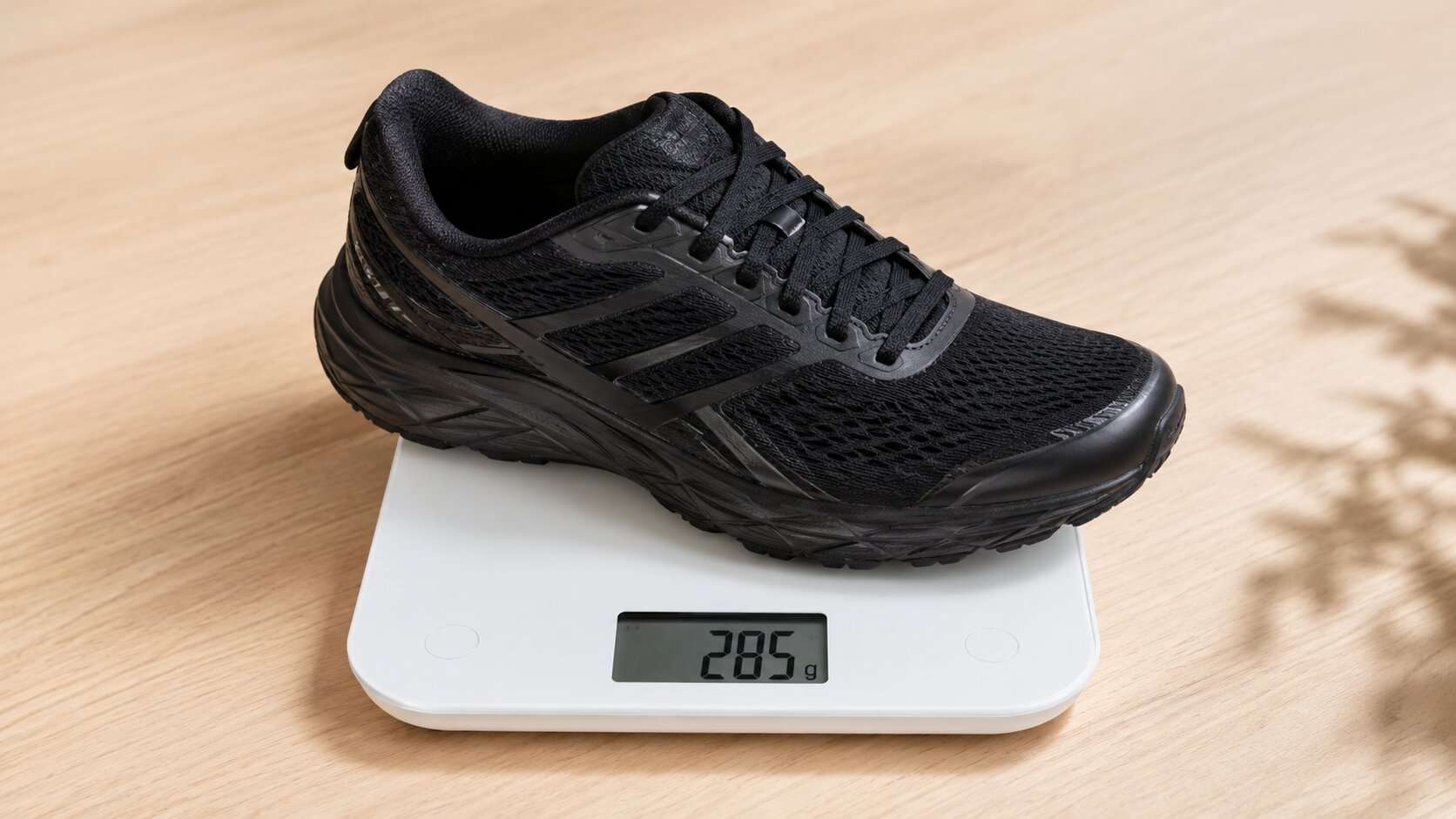
People who play tennis know best about how to select a pair of shoes for this game. There are many things that are unknown to a general person who has very little knowledge about sports, especially tennis. The weight of a pair of tennis shoes varies, which means there are some factors you need to know about. If you are willing to know everything about it for the precise selection, this guide is for you. Before you start reading it, here is a similar guide about shoe collection by type and gender.
The average single tennis shoe weighs around 350 g (men) and 300 g (women). This weight could vary by 100 g above or below this average number. There are many factors that affect the weight, which is why you might find the weight surrounding this figure.
If we measure a single shoe’s weight in grams, it goes from 300 g to 450 g. If we measure in ounces, it will go from 9 ounces to 15 ounces. Likewise, the weight will go from 0.6 pounds to 0.99 pounds if we measure in pounds.
The total weight of a pair will be approximately double a single shoe’s weight. In grams, it will be around 580 g. In ounces and pounds, it will be 18 ounces and 1.2 pounds, respectively.
It depends on lots of factors that affect the total weight of a tennis shoe. The first reason is the use of materials, which directly affects it. The more material a shoe has, the more weight it will possess. Likewise, the structure and comfort level affect the weight factor. Requirements of an athlete or consumer like cushioning level, speed, overall comfort, and flexibility make the weight vary. Some tennis shoes are ultralight, and some are robust. The difference of weight is because of cushioning and design of the shoes.
Heavy-duty tennis shoes have a weight of more than 410 g. They offer less speed but a robust structure, more comfort, and high durability.
Standard type has weight between 380 g and 410 g, which provides moderate cushioning against risk of pain in feet.
Lightweight shoes weigh between 350 g and 378 g with minimal cushioning.
Ultralightweight have the least weight, which is less than 350 g. However, they feel like barefoot for short-duration running activities.
There is not a single format you will find in the footwear industry when it comes to defining sizes. There are different formats like the US, European, Chinese, and some other ones. Here are some ranges of sizes in popular formats followed globally.
(US format)
(European format)
(Centimeters)
If you pick shoes that are too tight, it will cause stiffness and pain in your feet. If you choose a loose shoe, it will cause friction and blisters in your feet. The selection of the correct size matters a lot, and you can have a tiny margin of one unit to prevent tightness in your feet.
The structure of a shoe is the primary factor that affects its comfort and functionality. It has to be durable in build, flexible in functionality, breathable in material, and robust in the outer shell. This is why you will find multiple materials in a pair of tennis shoes because all those materials contribute to overall performance.
For upper material, the most popular and successful choices are synthetic leather, skin leather, and nylon or polyester mesh. Leathers provide robust strength, but less breathability. Mesh provides less strength but superior breathability.
This is the core of a shoe that decides how comfortable it will be. It gets the most attention because it decides the flexibility and cushioning of shoes. Here are the details about what materials are used in each layer.
Insole- It is a thin layer that is made of EVA or PU foam. It creates a basic foundation for heel comfort.
Midsole – Then a thick layer comes to extend the cushioning, and it is made of TPU, PEBA, or EVA foam. TPU is more durable, and PEBA is the best. EVA is the cheapest, and PEBA is the most expensive.
Outsole – it is the thickest layer, which provides protection from external threats like ground hardness and sharp objects. It is made up of synthetic rubber for cushioning, durability, and grip with ground.
Absolutely, the weight affects the performance of the entire pair of shoes. Ultralight shoes provide the least comfort and durability, but the highest speed. Medium weight provides a balance between cushioning, durability, and speed. A higher weight provides the most durability, medium comfort, and the least speed.
Lightweight tennis shoes are suitable for those aiming for quick movements and compromise on durability. Heavier tennis shoes are for those who prefer durability over speed and flexibility. Both are good choices in their own ways.
Tennis shoes are lighter than most footwear, except running shoes. Since tennis is about continuous movement and sharp reflexes, their shoes have to be lightweight, flexible, and durable. This combination includes high stability of the feet against injuries. These shoes provide high grip on the tennis court to prevent accidents and mishaps, which is why their outer soles have to be robust. Also, the mesh shell provides high breathability against excessive perspiration, friction, and blistering in the feet. For everyday use, casual footwear follows a different balance of comfort, style, and practicality.
Both are for running activities, but one is solely for sprinting. That is why running shoes are lighter than even ultralight tennis shoes. There is a difference of around 3 ounces or 85 grams between them. However, running shoes are not compatible with tennis, which makes tennis shoes irreplaceable for tennis courts.
Use the right measuring tool instead of a standard weighing machine. Since shoes have weight in grams, you need to use a kitchen or smaller weighing machine that detects lighter weights. Then you need to ensure there is no trapped moisture in the shoes. Also, the dirt must be completely removed to get the accurate weight on scale. You have to remove shoe inserts if there are any. Then weigh each shoe alone, and then the pair.
They weigh between 9 and 15 ounces. Different kinds of tennis shoes have unique structures, which is why there is a range instead of a specific number.
Tennis shoes weigh around 300 g and 450 g. Some shoes may weigh less than 300 g, which would be near 250 g depending on the structure and size of the shoes.
Yes, larger size will need more material, which means its weight will be higher. So, smaller sizes have less weight than larger sizes.
It all depends on the requirements of each player. Some prefer ultralight, some prefer light, and some go for robust shoes. Factors like cushioning, breathability, material type, size, and design contribute to selection of shoes.
People who play tennis know best about how to select a pair of shoes for this game. There are many things that are un
READ FULLA lot of factors contribute to the decision of which platform can be considered the best for selling jewelry online.
READ FULLWhen it comes to jewelry selection, it is never an easy decision, especially for women. There are like countless thin
READ FULL