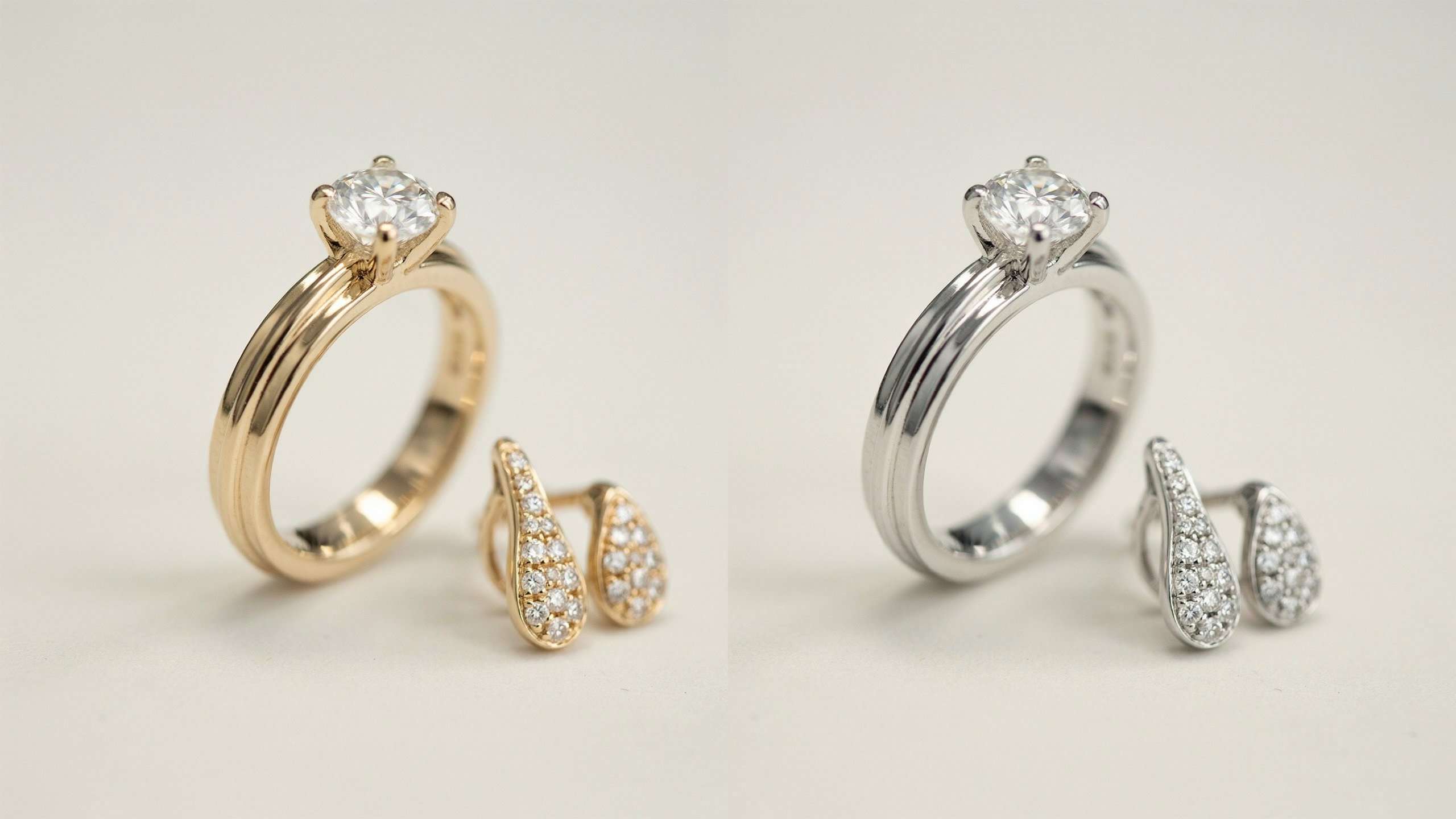
White gold and silver can look very similar, especially when both have a polished or rhodium-plated finish. However, they are different metals with different compositions, purity standards, durability, maintenance needs, and price points.
White gold is a gold alloy made by combining gold with other metals. Sterling silver contains 92.5% silver and 7.5% other metals. The right choice depends on how often you plan to wear the jewelry, how much maintenance you accept, your budget, and whether the piece needs to withstand regular use.
| Factor | White Gold | Sterling Silver |
|---|---|---|
| Main metal | Gold alloy | Silver alloy |
| Common purity | 14K or 18K | 925 sterling silver |
| Color | Bright white when rhodium plated; warmer without plating | Cool white to gray-white |
| Durability | Generally better suited to frequent wear | Softer and more prone to scratches and dents |
| Tarnishing | Rhodium helps protect the surface; plating can wear | More prone to tarnishing |
| Maintenance | Cleaning plus possible rhodium replating | Cleaning and occasional polishing |
| Price | Usually higher | Usually more affordable |
| Typical uses | Rings, fine jewelry, engagement jewelry | Earrings, necklaces, bracelets, rings, statement pieces |
The biggest difference is not simply color. It is what the jewelry is made from and how that material behaves over time.
White gold is not pure white gold found in nature. Gold is naturally yellow, so white gold is created by alloying gold with other metals such as palladium or nickel. The exact alloy varies by manufacturer and karat.
14K white gold contains 58.3% gold, while 18K white gold contains 75% gold. The remaining portion consists of other metals used to change the alloy's properties.
Many white gold pieces also receive a thin rhodium coating. Rhodium gives the surface a brighter, whiter appearance and adds a hard outer finish. It is important to understand that rhodium plating is a surface treatment. It does not change the underlying metal into silver or make the jewelry silver-colored throughout.
14K white gold has a lower gold content and is commonly chosen for jewelry that receives regular wear. 18K contains more gold and can have a slightly warmer underlying tone, particularly where rhodium has worn away.
When comparing pieces, check the karat mark rather than assuming every white gold item has the same gold content.
Silver used for jewelry is often sterling silver rather than pure silver. Sterling silver contains 92.5% silver and 7.5% other metals, commonly added to improve strength and workability. This is why sterling silver jewelry is often marked 925 or Sterling.
Fine silver can contain 99.9% silver, but its greater softness makes it less practical for many pieces that need regular handling or wear.
For buyers comparing white gold with silver, the 925 mark is useful because it identifies sterling silver. It does not mean the piece is white gold.
White gold and sterling silver start with completely different base metals.
White gold is still gold. Its karat tells you how much gold is present in the alloy. Sterling silver is primarily silver, with 92.5% silver in the standard 925 composition.
This distinction matters when comparing price, metal value, and the long-term characteristics of a piece. Two jewelry items may have almost identical colors but very different material compositions.
Rhodium-plated white gold usually has a bright, highly reflective white appearance. When the rhodium layer wears down, the underlying white gold may look slightly warmer.
Sterling silver has its own cool white appearance. It can develop a darker surface over time as it tarnishes. Some buyers actually prefer this natural change because it can add contrast to textured or detailed designs.
This is why white gold vs silver cannot always be settled by looking at a photograph. Rhodium-plated sterling silver can also have a bright white finish, making visual identification unreliable.
White gold is generally a better fit for jewelry that receives frequent wear, although its actual durability depends on the alloy, design, thickness, and construction.
Sterling silver is softer and can be more susceptible to scratches, dents, bending, and surface wear. This does not make silver unsuitable for everyday jewelry. It means the design and type of jewelry matter.
For example, a silver necklace may experience less physical stress than a silver ring worn on the hand every day. A large silver pendant may also be perfectly practical even when a delicate silver ring requires more care.
White gold is usually more expensive than sterling silver because it contains gold and requires additional alloying and finishing processes. The price also depends on the karat, jewelry weight, design, gemstones, workmanship, and brand.
Sterling silver normally provides a lower material cost, which makes it practical for buyers who want a white-metal appearance without paying for gold content.
However, metal alone does not determine the final jewelry price. A detailed sterling silver piece from a skilled maker can cost more than a simple white gold item from another seller.
This is one of the most important differences for long-term ownership.
Sterling silver can tarnish when it reacts with substances in its environment. Regular cleaning and proper storage can restore its appearance. A polishing cloth is often enough for light surface tarnish.
White gold is different. The underlying alloy does not behave exactly like sterling silver, but many white gold pieces rely on rhodium plating for their bright white finish. That coating can gradually wear, especially on areas that receive frequent friction. Replating can restore the bright surface when needed.
So the maintenance trade-off is not simply “white gold needs no care.” Silver usually needs polishing, while rhodium-plated white gold may eventually need professional replating.
Neither metal should automatically be described as hypoallergenic.
Some white gold alloys contain nickel, which can cause a reaction in people with nickel sensitivity. Sterling silver is also an alloy, so its additional metals matter.
If you have a known metal allergy, ask the seller or jeweler for the actual alloy composition before buying. Do not choose a metal based only on its color or the label “silver” or “white gold.”
White gold does not suddenly become yellow gold.
The warmer color that some people notice usually appears when the rhodium coating wears away and the underlying white gold becomes more visible. The exact color depends on the alloy used to make the white gold.
If you prefer the bright, highly white appearance of rhodium-plated jewelry, a jeweler can assess the piece and determine whether replating is appropriate.
This is an important distinction when buying white gold. Ask whether the item is rhodium plated and understand that the finish may require maintenance over time.
Start with the hallmark, but do not rely on appearance alone.
White gold may carry marks such as 10K, 14K, 18K, 585, or 750, depending on its gold purity and marking system. Sterling silver commonly carries 925 or Sterling marks.
Weight and appearance can provide additional clues, but they are not definitive tests. Rhodium-plated silver can look remarkably similar to rhodium-plated white gold, and jewelry construction can affect how heavy a piece feels.
For a valuable or uncertain item, professional metal testing is more reliable than trying to identify it by color. GIA also recommends paying attention to markings and professional guidance when determining jewelry materials.
The best choice can change depending on the type of jewelry.
For engagement and everyday rings: White gold can be practical when the ring will receive frequent wear and you want a gold-based metal with a bright white finish. Sterling silver can work for fashion or occasional rings, but its softer nature and tarnishing require more attention.
For necklaces and earrings: Silver can be a practical choice because these pieces generally experience less impact than rings. White gold remains useful when you want the gold content and finish associated with fine jewelry.
For bracelets and statement pieces: Both metals can work. Silver can make larger designs more accessible, while white gold may be selected when the buyer prioritizes gold content and a more premium fine-jewelry construction.
For buyers looking at silver jewelry collections, compare the actual material, construction, finish, and intended use rather than choosing based only on color. These details also matter when evaluating pieces from a wholesale silver jewelry supplier, particularly when different silver qualities and finishes can look similar but differ in durability and maintenance requirements.
These three terms should not be treated as interchangeable.
White gold: A gold-based alloy, usually identified by karat or fineness.
Sterling silver: An alloy containing 92.5% silver.
Silver-plated: A base material covered with a layer of silver.
Rhodium-plated sterling silver: Sterling silver with a rhodium surface finish.
This distinction matters because two pieces can look almost identical while having completely different underlying materials.
Before buying, check the product description and hallmark. Do not assume that a bright white finish means the jewelry is white gold.
Choose based on how you expect to use the jewelry.
White gold may suit you if:
You want a gold-based jewelry metal.
The piece will receive frequent wear.
You prefer a bright white rhodium finish.
You are comfortable with possible replating in the future.
You are buying a ring or another piece intended for long-term regular use.
Sterling silver may suit you if:
You want a more affordable white-metal option.
You like the natural look of silver.
You do not mind occasional polishing.
You want larger or more experimental designs at a lower material cost.
Gold content is not an important part of your purchase decision.
There is no universal winner in white gold vs silver. The better fit depends on the jewelry type, expected wear, maintenance preference, appearance, and budget.
For additional buying considerations, see this guide on choosing affordable silver jewelry
No. White gold is a gold alloy, while sterling silver is an alloy containing 92.5% silver. They can look similar, especially when both have a bright surface finish.
Usually, yes. White gold contains gold, and its price is also affected by karat, weight, design, gemstones, workmanship, and finishing.
White gold does not have the same tarnishing behavior as sterling silver. However, its rhodium coating can wear and expose the warmer underlying alloy. Sterling silver is more prone to visible tarnishing and may need polishing.
It can appear warmer when its rhodium coating wears away. The underlying white gold has a warmer tone than a fresh rhodium finish.
The answer depends on the alloy, construction, design, and type of jewelry. In general, white gold is often selected for frequent-wear pieces because it is more resistant to everyday wear than sterling silver, while silver can require more attention to scratches and tarnish.
It can be a suitable option for an engagement ring because it combines a gold-based alloy with a white appearance and is commonly used in fine jewelry. The choice should also consider the alloy, stone setting, expected wear, and maintenance needs.
Yes. Their similar white-metal appearance can make them easy to combine. Differences in finish or surface color can create subtle contrast, so matching the overall style is more important than treating them as identical metals.
No. 925 identifies sterling silver, meaning the alloy contains 92.5% silver. White gold should be identified by its gold karat or fineness marking, such as 14K, 18K, 585, or 750, depending on the marking system.
If you see 925 stamped on jewelry, it means the metal is marked as 92.5% silver by fineness. The remaining 7.5% is ma
READ FULLWhite gold and silver can look very similar, especially when both have a polished or rhodium-plated finish. However,
READ FULLTranish looks bad, but it rarely means your jewelry is ruined. In most cases, you can fix it at home in under ten min
READ FULL