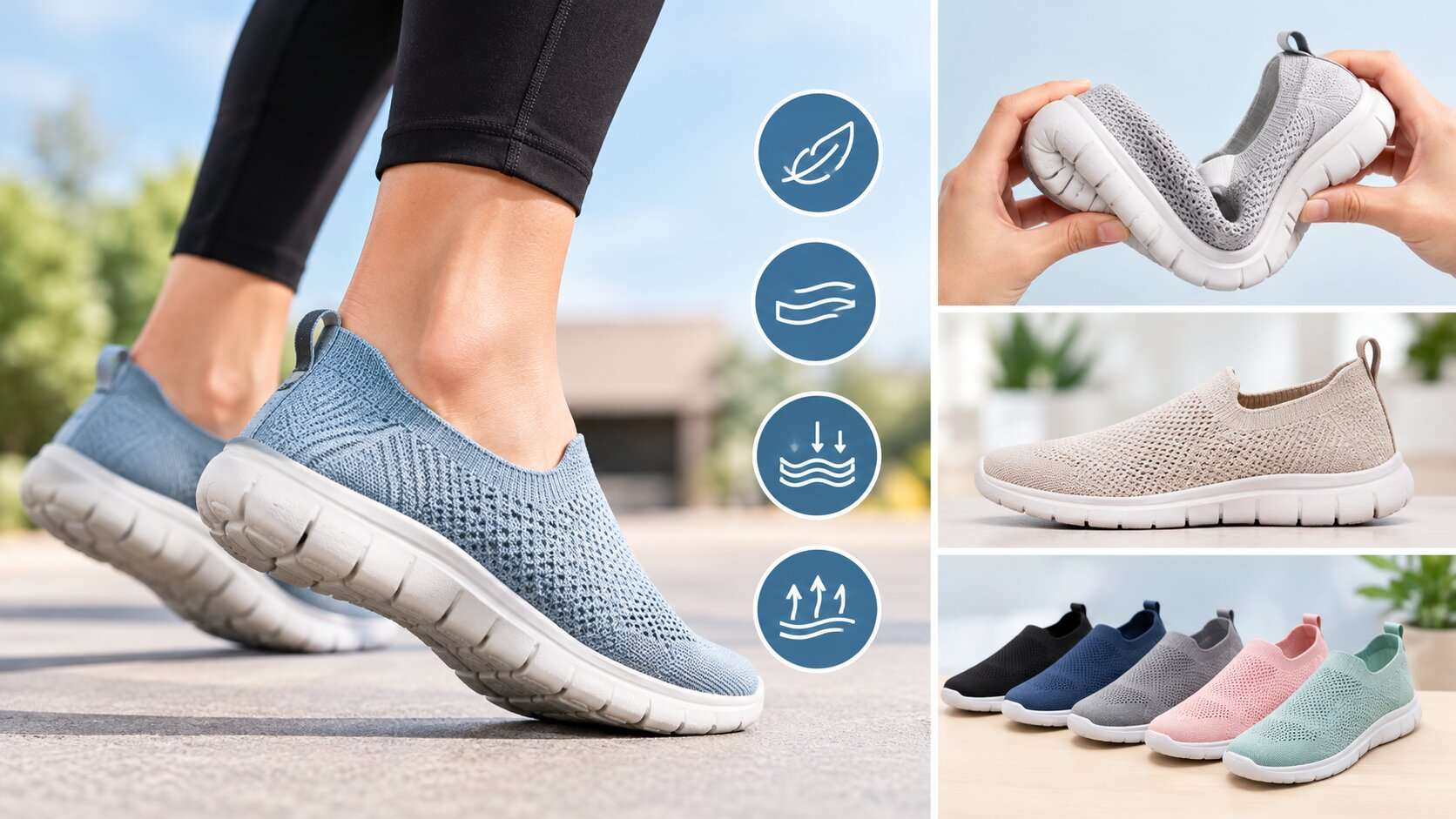
Soft-soled shoes appeal to customers who want flexibility, lightweight construction, and comfort for everyday wear. But for retailers, choosing the right products involves more than judging how soft a sole feels. You need to understand how the shoe is constructed, where it performs well, and where its limitations may lead to customer complaints.
A shoe that feels comfortable during a quick fitting may not meet a customer's needs after several hours of wear. That is why you should assess sole flexibility, cushioning, traction, and durability before deciding which styles belong in your range.
This guide explains what soft-soled shoes offer, how they differ from hard-soled designs, and what you should check when selecting products for your customers.
A soft sole is generally designed to bend more easily than a rigid sole. Depending on the shoe's construction and shape, it may also provide a lighter feel and closer contact with the ground.
Soft-soled footwear includes various show types like moccasins, slip-ons, casual flats, and everyday sneakers. However, these styles do not all offer the same level of flexibility or cushioning. Many shoe construction features like the material, sole thickness, and tread pattern, determine how each shoe performs.
For shoe retailers, this difference has a huge impact on customer preferences and sales Customers ask for soft-soled shoes because they want something comfortable for daily activities. But soft sole should match the shoe type for good fit and foot suppport.
A soft sole in a flexible slipper for indoor wear will different design and material from a soft sole in a sneaker designed for regular walking. Matching the product to the customer's needs helps set realistic expectations and reduces the risk of returns.
The sole affects how a shoe bends and absorbs impact. The sole is also vital for providing grip and holds up to repeated wear. If you are selecting footwear based on softness alone then that is not the correct strategy. You need to consider the whole function of the sole.
Soft-soled shoes nowadays use several materials. Each has different practical advantages.
Rubber offers flexibility and also provide useful traction for smooth and slippery surfaces. However, grip and wear resistance vary by rubber compound type and sole construction.
EVA foam is another popular material that is most commonly used in casual footwear and sneakers. It is lightweight and provides cushioning without adding much weight. But you should check how the material responds to repeated use, as softness does not automatically mean long-term durability.
Synthetic compounds allow manufacturers to balance weight, flexibility, cost, and appearance. Their performance varies, so avoid treating all synthetic soles as equivalent.
Leather appears in some traditional moccasins and casual footwear. It can offer a flexible feel and a distinctive appearance, although its resistance to moisture and abrasion depends on the leather, treatment, and construction.
During shoe selection it is your responsibility to evaluate each product on its actual construction. Simply checking the material name on a specification sheet is not enough. When sourcing footwear from casual shoe supplier, request clear product details and inspect samples where possible. This helps you compare products more accurately before committing to an order.
These three features influence the wearing experience, but they have different roles in basic functionality.
Flexibility describes how readily the sole bends. Check whether it bends naturally near the forefoot rather than folding excessively or resisting movement.
Cushioning affects how soft the shoe feels underfoot. Pressing the sole will give you some idea about cushioning, but it does not tell you everything about comfort during extended wear. The insole, midsole, and overall fit also has an effect on cushioning level.
Traction is a measure of how well the outsole grips a surface. You can check for grip level by examining the tread pattern and the core function of the shoe. A smooth sole works fine for certain indoor settings. However for outdoors these are not the best choice.
If you are building a product lineup, verify these features against the actual function of the shoe and price point. A low-cost casual shoe will definitely cost lessser than specialized sports footwear.
Neither construction soft-soled nor hard-soled is automatically better. The right choice depends on the shoes' usage scenario and customer preference.
| Feature | Soft-Soled Shoes | Hard-Soled Shoes |
|---|---|---|
| Flexibility | Bends more easily with foot movement. | Has a firmer structure and bends less. |
| Comfort | Often feels lighter and more flexible. | Provides a firmer feel underfoot. |
| Ground Feel | Allows more contact with the ground. | Creates a stronger barrier between the foot and the ground. |
| Protection | May offer less protection from sharp or rough surfaces. | May provide better protection, depending on construction. |
| Common Uses | Casual wear, indoor use, and everyday activities. | Dress shoes, work footwear, and styles needing a firmer base. |
| Support | Depends on the fit, cushioning, and shoe design. | Also depends on the fit, cushioning, and shoe design. |
| Best Selection Criteria | Check flexibility, traction, material quality, and intended use. | Check sole rigidity, durability, protection, and intended use. |
When comparing products for your store, avoid using sole softness as a shortcut for judging quality. A rigid shoe can lack adequate support, while a flexible shoe may provide useful cushioning and stability when properly designed.
That means your product descriptions should explain the intended use and relevant features instead of making broad claims about comfort or support. Clearer descriptions help customers choose more confidently and reduce mismatches between expectations and the product they receive.
Different styles serve the needs of different customers. Understanding those differences helps you build a range with a clear function that offers convenience and gives the customer plenty of shoe styles to choose from. Let us take a deeper look at soft-soled shoe styles.
Moccasins and slip-ons appeal to buyers who value easy wear and a relaxed design. They are multi-purpose and suit indoor use, casual outings, or short periods of everyday wear.
To check quality of this shoe type inspect three thing:the sole's grip, the security of the fit, and the materials used in the upper. A convenient slip-on design loses its appeal if the shoe slips off too easily or wears out quickly.
Canvas shoes and casual flats have a simple design that matches with a range of everyday outfits. Their lightweight material makes them the favorite choice for customers who want casual footwear.
To evaluate the quality of this shoe type inspect the seams, sole attachment, and outsole thickness. You must also consider practical lifestyle aspects like how easily the materials can be cleaned.
These details affect the customer's experience after purchase, not just the shoe's appearance on the shelf.
Casual sneaker construction combines flexible outsoles with foam cushioning and supportive uppers. They are preferred by customers looking for daily wear footwear that is worn for long periods and involves intensive use.
For quality assessment of sneakers you must check the fit, cushioning, tread, and overall stability. Do not assume that a soft midsole guarantees stable support or that every flexible sneaker is durble enough for extended walking.
Soft-soled footwear offers several advantages when the design matches the customer's needs.
Flexibility can improve ease of movement. Customers who prefer footwear that bends with the foot find suitable soft-soled styles more comfortable for routine activities. The ultimate value of the shoe still depends on fit and construction.
Lightweight designs appeal to everyday buyers. Shoes that feel cozy suit casual use, or indoor wear. For your shoe store, this creates opportunities to serve customers who prioritize convenience over heavy-duty protection.
Style variety supports a broader product range. Moccasins, flats, slip-ons, and sneakers allow you to offer different looks and uses without relying on one type of footwear.
Different materials support different price points. You can stock affordable flexible sole shoes for men and women across a range of casual styles. But compare construction and durability before treating a lower purchase price as better value. A product that generates repeated complaints can cost more to sell than its initial price suggests.
The key is to sell the right benefit to the right customer. Accurate product information is more useful than promising that every soft-soled shoe will feel comfortable for everyone.
Soft-soled footwear also has limitations that you should consider before choosing products for your range.
Durability varies. Lightweight materials suit casual wear but may not withstand demanding use. The materials and construction of casual shoes also influence how well footwear holds up over time. Cheap shoes will lower outsole, seams, and sole attachment quality especially when evaluating products at lower price points.
Protection may be limited. Flexible soles may provide less protection against sharp objects, rough terrain, or workplace hazards than footwear designed for those conditions. Make the intended use clear rather than allowing customers to assume that casual shoes offer work-shoe protection.
Support is not guaranteed. A soft sole can feel pleasant during a brief fitting without providing the structure a particular wearer needs. The main weakness of a soft sole is that it may deliver indequate foot support for prolonged standing.
Traction depends on the design. Not every flexible outsole grips equally well on wet, smooth, or uneven surfaces. Review the tread and the manufacturer's intended-use information before describing a shoe as suitable for those conditions.
Soft-soled shoes suit people looking for flexible, lightweight footwear for casual outings and indoor use. The right choice depends on the person's fit requirements.
When helping a customer choose, ask where they plan to wear the shoes and how frequently they expect to use them. Then explain relevant differences in flexibility, cushioning, traction, and protection.
As a shoe brand or retailer your goal should be to match each product to a clearly defined use. Check the construction before placing an order, describe the shoe's strengths accurately, and be transparent about its limitations.
That is how you build a more reliable footwear range: not by choosing the softest sole available, but by stocking products whose performance matches the needs and expectations of your customers.
Silver looks the same on a shop shelf whether it is sterling, plated brass or something in between. That is why check
READ FULLA stand collar can sit well on one customer and choke another. A “linen” tag can hide a fiber that shrink
READ FULLFrog buttons are the knotted loop-and-button closures known in Chinese as pankou (盘扣). A pankou is made of two pa
READ FULL